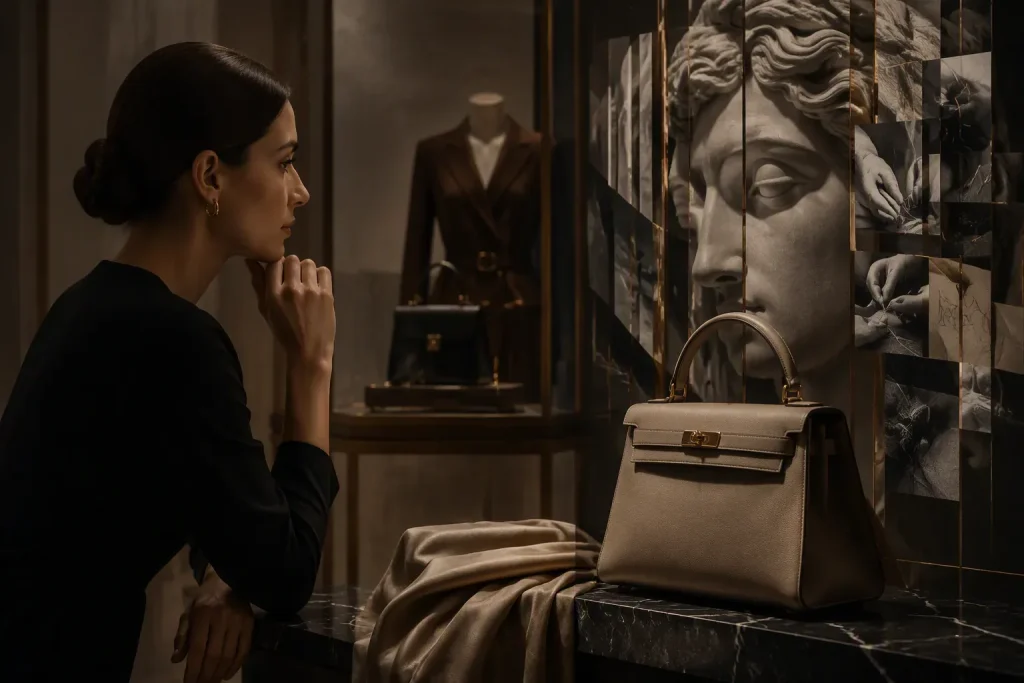
What Makes a Handbag Look Luxurious? A Guide to Luxury Bags

What Makes a Handbag Look Luxurious? A Guide to Luxury Bags

Luxury handbags are more than accessories—they are wearable architecture. They hold a point of view, a discipline of making, and a subtle promise that the details will stand up to scrutiny over years of use. But what, exactly, makes a handbag look and feel luxurious? If you’ve ever picked up two similar-looking bags and immediately sensed that one is in a different league, this guide explains why. From the quiet authority of good leather to the crisp tempo of fine stitching, we decode the elements of luxury so you can choose with confidence.
In this comprehensive guide from 2R Brand, you will learn how to read the language of luxury handbags: materials, craftsmanship, design, hardware, and finishing. We’ll also cover exclusivity cues, branding, care, and styling—because a luxurious bag isn’t only made; it is maintained and worn with intention. Whether you’re exploring your first serious purchase or refining a seasoned collection, consider this your roadmap to discerning quality.
The DNA of a Luxury Handbag
Every luxury bag is an orchestration of choices. Materials, methods, and design must align to create an object that looks elevated and performs beautifully. Below, we break down the core pillars that signal luxury at first glance and over time.
Material Mastery: Leather and Beyond
Material sets the mood. Leather remains the benchmark for luxury handbags because of its durability, character, and patina potential. But not all leathers—nor alternatives—are created equal.
Full-grain leather sits at the top. It retains the hide’s natural grain and, with care, builds a rich patina rather than wearing out. The surface should feel supple yet dense, with a fine, tight pore structure. Expect a subtle, not plastic, sheen.
Top-grain leather is lightly corrected or buffed to achieve a more uniform surface. It can still be excellent when paired with thoughtful finishing and robust structure. In many elegant satchels and totes, top-grain offers a balance between refinement and resilience.
Corrected-grain leather has heavier finishing to mask imperfections. It can look immaculate at first, but it tends to feel less natural and may not age as gracefully. In luxury contexts, corrected grain is usually reserved for highly specific design effects rather than a default.
Specialty finishes add texture and narrative:
- Pebbled (or grained) leathers disguise scuffs and are practical for daily-use bags while maintaining an elevated appearance.
- Box calf offers a smooth, almost mirror-like finish prized for formal silhouettes. It requires mindful care but rewards with an elegant presence.
- Saffiano (crosshatch-embossed) is structure-loving and scratch-resistant, making it a pragmatic yet refined choice.
- Nappa is buttery soft and luxurious to the touch; it can read ultra-premium in minimal designs where the leather does the talking.
- Suede communicates warmth and depth; in luxury bags it’s often used as lining or panels, where its tactile richness is protected.
Exotics and specialty materials appear in high luxury, but thoughtful buyers today also balance aesthetics with responsibility. If considering exotics, ensure provenance and compliance are transparent. For a modern alternative, premium non-leather materials can be luxurious when they prioritize hand-feel, longevity, and environmental integrity.
Look for suppliers and tanneries aligned with rigorous standards. Certification bodies such as the Leather Working Group audit environmental performance and traceability in leather production. For textiles used as linings or exterior panels, OEKO-TEX certifications can indicate low-impact processing and safety.
Want to go deeper? Explore our perspective on materials and care in the 2R Brand care guide and see current selections curated for long-term wear in our luxury handbags collection.
Craftsmanship and Construction: The Architecture Inside
Luxury is engineered. Beneath beautiful surfaces lie patterns, reinforcements, and techniques that ensure a bag holds its shape and handles daily stress gracefully.
Pattern cutting matters. In refined bags, panels are symmetry-matched, and the grain direction is deliberate to resist stretching. Corners and curves are cut with precision so seams glide rather than pucker. This quiet perfection is most obvious in minimal designs, where there’s no print to distract from flaws.
Stitching is a clear tell. High-stitch-per-inch counts create a fine rhythm; stitches should be even, tight, and aligned with edges. On luxury bags, you’ll often see consistent stitches around curves and across different layers without wavering. Even where machine-sewn, luxury houses use high-spec machinery and trained artisans to achieve a clean line with careful backstitching. In some ateliers, hand-stitching in key areas (like strap anchors) increases strength and adds a human touch.
Edge finishing separates excellent from average. Look for neatly turned edges or meticulously applied edge paint with multiple coats and polished smooth layers. The finish should be even, without bubbling, cracking, or rough patches. Edges are where you can read patience and pride.
Reinforcements and linings are the bag’s skeleton. Luxury bags often use structured interlinings that prevent warping and help the bag stand tall. Stress points—where handles meet the body, where closures pull—are reinforced and secured with neat bar tacks or rivets. Inside, you’ll find linings in resilient, tight-weave textiles or suede-like materials that resist pilling and fraying.
Balance and weight are critical. A luxurious bag feels substantial but not cumbersome. The weight distribution through the base and side panels ensures it doesn’t collapse under its own elegance. When you set it down, it should sit squarely; when you carry it, it should move with you without squeaks or creaks.
Hardware: Precision You Can See and Hear
Hardware translates design into function—zips, clasps, feet, rings. On a luxury handbag, hardware is engineered as seriously as the bag itself.
Metallurgy and plating. High-end hardware often uses solid brass or stainless steel with thick, durable plating. The finish (gold, palladium, gunmetal) should be evenly applied, with consistent tone across components. Avoid hardware that feels feather-light or tinny; it should have a satisfying density. Edges should be clean and deburred.
Zippers and closures. A luxury zipper glides without noise or snag. The pull tabs are proportionate and anchored securely. Clasps and turn-locks engage with a firm, smooth click—not a snap that feels brittle. Magnetic closures are strong but not so aggressive they mark the leather.
Chains and straps. Chains should be fluid, not stiff, with links that don’t pinch hair or fabric. Leather straps should have stable edge finishing and interior reinforcements to prevent elongation. Adjustable hardware should lock cleanly at each setting.
Feet and studs. Base feet protect the bag and hint at its seriousness. They should be even, aligned, and centered, with screws or rivets that remain secure over time.
Design Intelligence: Proportion, Silhouette, and Use
Luxury is as much about restraint as it is about expression. The most expensive-looking bags often whisper rather than shout.
Proportion is where luxury begins. Handles that crest just above the top line, flap curves that echo the base arc, and pocket placements that don’t bulge—each contributes to visual calm. The silhouette should suit the leather: structured materials excel in architectural top-handles; softer leathers thrive in tailored slouch.
Weight and ergonomics show consideration. A bag can look impeccable on a pedestal, but luxury shows when it’s carried. Strap drop lengths that work with coats and blazers; crossbody straps that don’t torque the bag at the D-ring; rolled handles that don’t chafe—the design should respect the body.
Interior design distinguishes the merely pretty from the genuinely practical. Luxury interiors offer thoughtful compartments, secure zips, and card or slip pockets that simplify life without bulk. The lining color is usually balanced—light enough to see contents, dark enough to resist obvious staining.
Details That Quietly Shout Luxury
Some signals are subtle until you train your eye. These micro-cues create a macro impression of luxury.
Edge Work: Turned and Painted
Turned edges, where leather wraps around and is stitched from the inside, look clean and resist fraying. Raw edges can be luxurious too—if edge paint is layered and sanded between coats. Look for even color, no drips, and smooth transitions at corners. At strap ends, the finish should be continuous and sealed.
Surface Finish and Hand
Luxurious leather has a conversation with light. Rather than a plastic gloss, you’ll see a quiet luster that deepens with movement. Run your fingertips along the surface; the leather should feel warm and alive, not cold and waxy. Press lightly—quality hides rebound without leaving a permanent dent.
Stitch Rhythm
On luxury bags, stitch rhythm is like heartbeat—consistent and measured. Look at topstitching along flap edges and pocket seams: tight spacing, equal tension, and careful backstitching that does not create bumps. Inside pockets, stitches should be as neat as outside. The mark of care is uniformity even where you don’t usually look.
Logos and Branding
In many luxury bags, the brand name is quiet—embossed in small caps, heat-stamped with crisp edges, or plated with discreet lettering. Logos should be aligned, neither smudged nor over-inked, with clean lines even in tiny fonts. A luxury bag can be anonymous to the casual eye but unmistakable to the trained one.
Lining and Piping
Luxurious linings are tightly woven and abrasion-resistant, often cotton blends or microsuede. They resist seam-stretch and hold stitching without tearing. Piping, where present, should sit flush without twisting, offering a defined silhouette without adding bulk.
Color Discipline
Luxury color palettes often lean on rich neutrals—black, deep chocolate, cognac, taupe, navy—because they telegraph longevity. Saturated jewel tones and rare pastels can be opulent when balanced with restrained hardware. Color uniformity across panels is important; mismatched dye lots betray rushed production. Over time, fine leathers develop a patina rather than cracking or peeling finishes.
Exclusivity and Story: The Invisible Threads
Luxury isn’t only a product; it’s a process and a narrative. Exclusivity is less about scarcity-for-show and more about intentional limits.
Short runs and seasonality. Small-batch production improves quality control and preserves character. Limited editions can highlight craft techniques or rare materials, but the value lies in the make, not the serial number alone.
Traceability. Transparency around sourcing and finishing—where hides are tanned, who made the bag—adds credibility and helps you understand what you’re paying for. Certifications and audits (like those by the Leather Working Group) are practical signals, not marketing fluff.
Packaging and aftercare. Thoughtful packaging protects the bag and sets expectations for longevity. Dust bags, structured boxes, and care leaflets aren’t frills; they’re tools that preserve your investment.
At 2R Brand, our selection focuses on enduring design and credible construction—pieces that feel as good as they look. Discover more about our curation and principles on the About page, and browse current arrivals in handbags.
How to Judge a Bag in the Real World
When you’re holding a bag in-store or unboxing at home, use this field guide to evaluate luxury cues quickly and accurately.
Visual Scan
- Symmetry: Check that panels align and pockets sit straight. The bag should look balanced from all angles.
- Edges: Inspect corners and strap ends; edge paint should be smooth and even, turned edges neat and consistent.
- Hardware: Color-match all metal parts; finishes should be uniform without pitting.
- Stitching: Count a small section—are stitches evenly spaced and straight, including around curves?
- Logo: If present, it should be crisp, centered, and properly spelled (for pre-owned or marketplace purchases).
Tactile Checks
- Hand-feel: Press the leather lightly. It should feel resilient, not brittle, and warm rather than plasticky.
- Weight: A certain heft is good, but not to the point that it feels fatiguing empty. Balance matters.
- Hardware action: Zip and un-zip; open and close clasps. They should move smoothly with a confident click.
- Strap comfort: Try the bag on; straps should sit comfortably without cutting in or slipping off.
Functional Integrity
- Interior: Pockets should be usable and secure; linings taut but not tight.
- Base stability: Set the bag down. It should stand or sit evenly without collapsing.
- Closure strength: Magnets and zips should hold; flaps should not ride up or distort under gentle load.
If buying online, review material descriptions and close-up images. On rominarr.ir, we provide detailed photography and specifications to support your decision. Questions? Our team is here to help—contact us anytime via the Contact page.
Design Choices That Read as Luxurious
Subtle design cues can elevate a bag’s presence. Consider these elements as you choose your next piece.
Quiet Logo Placement
Understated branding—embossed initials, a small plaque, or a signature stitch—lets the materials and construction lead. Many seasoned collectors gravitate toward pieces that express identity through silhouette and finishing rather than overt logos.
Architectural Silhouettes
Structured top-handles, trapezoid totes, and tailored saddle shapes communicate discipline and polish. If you prefer softer forms, look for refined slouch that still keeps a clean top line and stable base. The bag should keep composure even when partially filled.
Considered Hardware
Elegant hardware is proportionate and purposeful. A single statement lock, fine chain with leather interwoven, or discrete feet can be enough. Overly ornate details can date quickly; choose elements that age gracefully.
Depth of Color
True luxury tones exhibit depth—think espresso browns, midnight navy, or burnished caramel. In lighter shades, evaluate even dye and finish integrity. Subtle contrast edge paint can outline the silhouette without shouting.
Inside-Out Beauty
A luxury bag remains beautiful inside. Linings are cleanly finished, seams covered, and labels stitched straight. Even the pockets’ interior turning and trims align with the overall design language. Beauty shouldn’t stop at the flap.
Care and Maintenance: Keeping Luxury Luxurious
How you care for your handbag affects not only longevity but also how luxurious it reads day-to-day. A well-kept bag communicates respect for materials and craft.
Daily Habits
- Rotation: Avoid carrying the same bag every day. Rotation allows leather to rest and moisture to dissipate.
- Loading: Don’t overfill. Use pouches to organize contents and prevent distortion or corner stress.
- Surface care: Wipe with a soft, dry cloth after use. For smooth leathers, a lightly dampened cloth can lift surface dust; avoid saturating.
Seasonal Care
- Conditioning: For full-grain and top-grain leathers, apply a suitable conditioner sparingly every few months. Test any product on an inconspicuous area.
- Water protection: Consider a breathable protectant for untreated leathers; reapply as directed. Suede and nubuck require specific sprays and gentle brushing.
- Storage: Use a dust bag and maintain shape with gentle stuffing—tissue or muslin, not newspaper. Store upright away from direct sunlight.
Hardware and Color Transfer
Metal components benefit from occasional gentle polishing with a microfiber cloth. Be mindful of color transfer: dark denim can stain light leathers, and fresh dyes may migrate. Place your bag on clean surfaces or use the protective feet when available.
For more detailed guidance, see the 2R Brand care guide. We continually update resources to reflect best practices and evolving materials.
Value, Price, and the Long View
Price and luxury are related but not synonymous. True luxury reflects materials, craft, design, and longevity. A fairly priced luxury bag delivers cost-per-wear value and the satisfaction of owning something well-made. When comparing options, ask:
- Does the material have integrity and patina potential?
- Is the construction robust, with serene stitching and finished edges?
- Is the design timeless enough to outlast trends while still feeling current?
- Does the brand support care and transparency?
If you’re uncertain between two choices, revisit priorities: daily practicality versus statement allure, lightness versus structure, neutrality versus color. Owning fewer, better pieces often creates a more luxurious wardrobe experience. Explore our curated luxury handbags to find a design that aligns with your style and lifestyle.
Sustainability and Responsibility in Luxury
Modern luxury respects people and the planet. Responsibly produced leathers, traceable supply chains, and certified dyes and linings are increasingly part of what makes a bag truly luxurious. Look for brands and retailers who publish material choices and partner with recognized standards. Explore the Leather Working Group to understand tannery ratings and the OEKO-TEX benchmark for textiles. For broader context on sustainable fashion, the CFDA maintains a useful resource library.
Styling: How to Wear a Bag So It Reads as Luxury
Even the best-made bag can look less elevated if styling is off. These subtle cues enhance your bag’s natural sophistication.
Proportion with Outfits
- Scale harmony: Petite frames often benefit from small-to-medium bags; tall frames can carry larger structures without overwhelm. Balance bag size with garment volume.
- Strap length: Adjust straps to sit thoughtfully—crossbody at the high hip, shoulder at mid-rib, top-handle at the fingertips. Proper placement looks deliberate.
Color Strategy
- Neutrals for foundation: Black, taupe, and cognac anchor most wardrobes and always read luxe when paired with polished footwear and belts.
- Statement tones: Deep emerald or burgundy sing against neutrals; keep hardware minimal to avoid overwhelm.
Condition and Clean Lines
Keep the silhouette crisp. Remove dangling tags or keychains unless they complement the design. Ensure handles and straps aren’t twisted and that the bag’s face remains free of imprints or bulges. A streamlined presentation signals care and refinement.
Authenticity Cues Without the Hype
Many authenticity markers vary by brand, but general cues help evaluate credibility, especially in secondary markets. Examine consistency:
- Labeling: Brand stamps or labels should be cleanly embossed or stitched flat with no uneven glue marks.
- Serials and cards: If a serial or microchip is standard for a brand, the style and placement are precise. Mismatched fonts or sloppy stamping raise flags.
- Hardware match: Screws, rivets, and zips should share the same tone and finish; mismatched components can indicate tampering or replicas.
When in doubt, buy from trusted sources. At 2R Brand, our curated selection is vetted for quality and integrity. If you need guidance, connect with our team via the Contact page or visit rominarr.ir.
Common Mistakes That Undercut a Luxury Look
A few missteps can diminish even a beautifully made bag. Avoid these pitfalls:
- Overstuffing: Distorts seams and stresses hardware; use pouches to reduce strain.
- Neglecting care: Skipping conditioning or waterproofing on suitable leathers accelerates wear.
- Clashing metals: Excess jewelry or belts in a different metallic tone can visually fight with a bag’s hardware—coordinate or neutralize.
- Resting on rough surfaces: Avoid placing bags on abrasive tables or floors; use base feet or a protective cloth.
Checklist: Does This Handbag Read as Luxury?
Use this quick checklist while shopping or evaluating your wardrobe:
- Leather shows fine grain, depth, and resilience (or textile shows tight weave and integrity).
- Stitching is straight, tight, and consistent around curves.
- Edges are neatly turned or smoothly painted without cracks.
- Hardware feels dense, finishes are even, closures click cleanly.
- Design proportions flatter your body and wardrobe.
- Interior is orderly, with taut linings and secure pockets.
- Color is rich and uniform, with a subtle luster—not plastic shine.
- Branding is composed; labels and stamps are crisp and aligned.
FAQ: Luxury Handbags, Answered
Which leather looks most luxurious?
Full-grain and fine box calf often read the most luxurious due to their depth, smoothness, and patina potential. Pebbled leathers can look equally premium and are more forgiving for daily wear. The right leather for you balances elegance with your lifestyle.
Is heavy always better in hardware?
Not always. Hardware should feel substantial, but weight must be balanced so the bag remains comfortable. Quality shows in finish and function—smooth zips, crisp clicks—more than in sheer mass.
How do I keep a bag looking new?
Rotate usage, avoid overloading, wipe down after wear, condition when appropriate, and store in a dust bag with gentle stuffing. Address spills quickly and be mindful of color transfer from dark denim.
Do logos make a bag look more luxurious?
Not inherently. Understated branding often reads more luxurious because it lets materials and construction shine. Choose a logo treatment that aligns with your style and feels timeless.
Are vegan or alternative materials luxurious?
They can be, when they emphasize hand-feel, durability, and responsible sourcing. High-quality alternatives with tight weaves, robust coatings, and thoughtful construction can look and perform luxuriously.
What’s the best color for longevity?
Classic neutrals—black, deep brown, navy, taupe—age gracefully and are easy to style year-round. If you love color, rich jewel tones with minimal hardware can stay elegant for years.
How can I evaluate a bag online?
Study close-up photos of stitching, edges, and hardware; read material details; check dimensions and weight; and review the return policy. On rominarr.ir, product pages include detailed specs to help you choose confidently. See our returns policy for peace of mind.
What’s the one feature that most strongly signals luxury?
No single feature defines luxury, but stitching and edge finishing together tell the clearest story. They reveal both the precision of the workshop and the brand’s tolerance for quality.
Final Thoughts
A luxurious handbag is the sum of its choices. Materials with depth and integrity, construction that honors the architecture of the form, hardware engineered for longevity, and design that respects proportion—these create an object that ages beautifully and supports your life. As you build your collection, prioritize pieces that feel as good as they look and brands that stand behind their craft. Explore the 2R Brand luxury handbags to find designs that match your standards—and your story.
You can also find the most luxury bags in gucci